 Skip to content
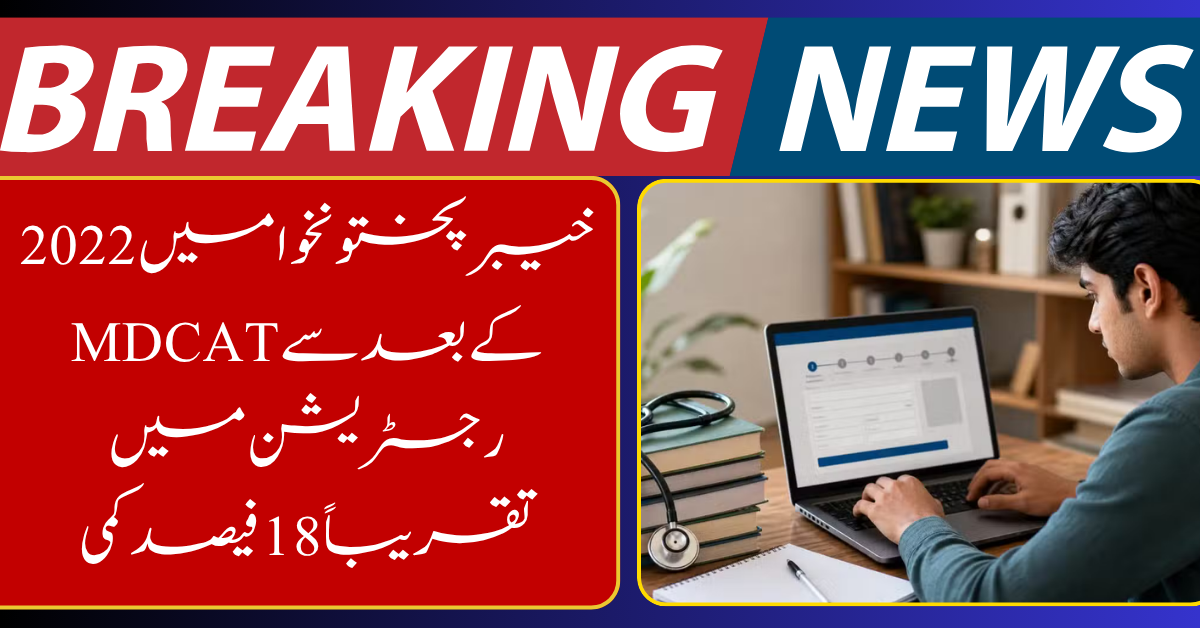
The number of students registering for the Medical and Dental College Admission Test (MDCAT) in Khyber Pakhtunkhwa (KP) has dropped significantly over the past few years, highlighting a major shift in students’ career preferences. Official figures show registrations have fallen from 46,232 to around 38,000, reflecting a decline of nearly 18%.
Education experts believe the decrease does not necessarily indicate a loss of interest in the medical profession. Instead, it reflects changing priorities as students carefully evaluate the cost, duration, and career prospects associated with medical education.
According to Khyber Medical University (KMU) Vice-Chancellor Prof. Dr. Zia-ul-Haq, today’s students are making more informed decisions than ever before. He explained that many young people are exploring professions beyond the traditional MBBS and BDS pathways due to evolving job markets and technological advancements.
One of the biggest reasons behind the decline is the high cost of medical education. Students also face several years of undergraduate studies, house jobs, postgraduate specialization, and licensing requirements before beginning independent medical practice. These factors have encouraged many to consider careers that require less time and financial investment.
Experts say fields such as Artificial Intelligence (AI), Data Science, Biotechnology, Genomics, Cybersecurity, Public Health, Health Informatics, and Allied Health Sciences are becoming increasingly popular among students. These disciplines offer growing employment opportunities both in Pakistan and internationally.
The healthcare sector itself has also changed considerably. Modern hospitals and healthcare systems rely on multidisciplinary teams that include nurses, physiotherapists, pharmacists, medical laboratory scientists, nutritionists, psychologists, public health specialists, and biomedical researchers alongside doctors and dentists.
Despite the recent decline, competition for admission to public-sector medical colleges remains intense because of the limited number of MBBS and BDS seats available each year. Thousands of qualified candidates still appear in MDCAT hoping to secure admission to leading medical institutions.
Education analysts believe the changing trend reflects a broader transformation in Pakistan’s higher education landscape. Students are increasingly selecting careers based on future demand, salary potential, global opportunities, and work-life balance, rather than following conventional career paths alone.
Experts suggest that universities should continue expanding programs in emerging technologies, health sciences, and research-based disciplines to meet changing market needs while ensuring Pakistan continues to produce skilled healthcare professionals for the future.